


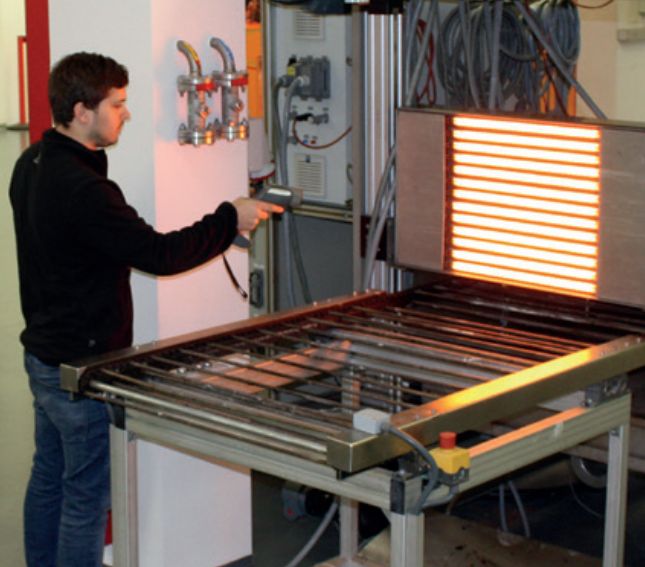
Drying MEMS Wafers Without the Headache
If you’ve ever worked in MEMS fabrication, you know the struggle of drying wafers. It’s a total bottleneck. You need the liquid gone, and you need it gone without leaving a single speck of residue behind. Our approach? We use short-wave IR lamps to hit the wafer surface directly. It’s basically a flash-evaporation trick. The goal is to get the wafer bone-dry without turning the entire tool chamber into a sauna.
Why Directional Heating Actually Works
Most heaters rely on convection. They warm up the air, and then the air warms up the part. It’s slow, it’s wasteful, and it creates “hot walls.” Nobody wants to work with a machine where the outer casing is a burn hazard. That’s why we shifted to directional IR heating. IR radiation travels in a straight line. It doesn’t care about the air; it just wants to hit the target. By using quartz envelopes and some clever reflectors, we can aim all that energy right at the substrate. The result? The internal chassis stays cool, and the heat stays exactly where it belongs—on the wafer, not the machine’s skin.
Power, Safety, and the Electrical Mess
These high-wattage IR lamps pack a punch. You need that kind of energy density if you want fast drying cycles, but it can be a nightmare for your electrical setup. If you go with a high-voltage lamp, you’ve got to make sure your wiring can actually handle the load. Otherwise, you’re just waiting for something to burn out. We also focus the beams to stop “stray” radiation from bouncing around. It’s a safety thing. An operator should be able to touch the side of the tool without getting a nasty surprise, even while a wafer inside is sitting at 150°C.
The Catch (Because there’s always one)
Directional heating isn’t a magic wand. Since the beam is so intense, it can create localized hot spots if the wafer isn’t sitting just right. You have to be obsessive about the focal length. If the lamp is too close, you might warp the wafer. Too far, and your drying time starts to creep up, killing your throughput. It’s all about finding that sweet spot where speed and safety shake hands.