
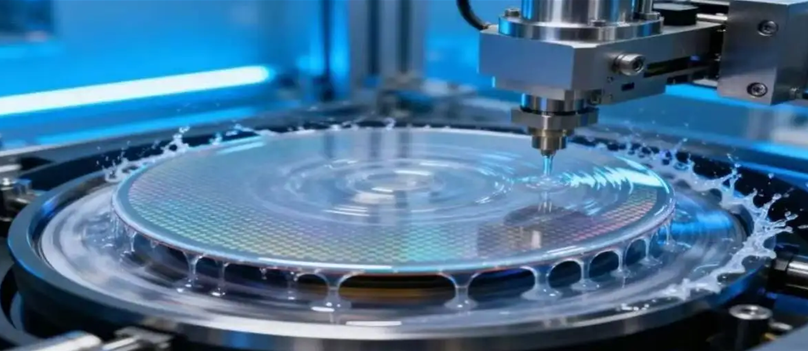
On the fab floor, you know how it is: a photoresist bake that drifts even a fraction of a degree can send critical dimension control right out of spec. You don’t need “heat.” You need thermal stability that stays inside the process window, shift after shift. What matters, technically We run linear infrared heating emitters that deliver short-wave NIR, and we hold wafer-level temperature uniformity within ±0.1°C. The response is fast—milliseconds—so the closed-loop control can track the bake profile tightly. The emitter package is built for cleanroom Class 1–100, with materials and finishes that keep particle generation as close to zero as you can get. Output stays stable over 5,000+ hours, with less than 5% intensity drift. That’s how you keep soft bake and hard bake setpoints repeatable, day after day. Why this works in photoresist Photoresist processing is all about managing the thermal budget. Too little energy and the solvent doesn’t clear. Too much and the resist flows, or you stress the underlying film. With these emitters, you get predictable, uniform heating across the wafer, so CDs stay consistent, defects drop, and scrap goes down. The fast thermal response also cuts cycle time, and you only spend energy exactly where the recipe calls for it—no overshoot. Things to keep in mind These emitters are engineered to meet international semiconductor equipment standards, and they’re designed as a validated, equivalent alternative to mainstream platform specs. They integrate into existing oven blocks, but you have to pay attention to mounting tolerances and emissivity matching. Alignment has to be precise, and the electrical connections need to be clean—thermal performance depends on both. Plan dedicated control wiring so the control loop stays stable, because that’s what the process actually demands.