
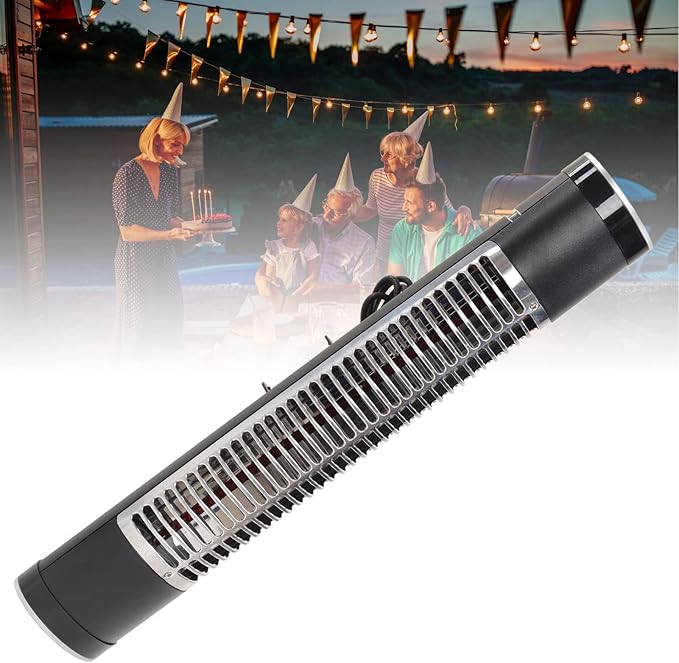
Don’t Let Your Locker Room Heaters Burn Out
If you’re swapping out heating elements in a locker room or any other “wet zone,” don’t just grab the first thing that matches the wattage. You need to look for an IP65 rating. Here’s why: it’s all about the seal. IP65 means the housing is tight enough to keep dust and water sprays away from the electrical contacts. Without that protection, moisture just sneaks into the terminals. And once that happens? Your circuit is toast in a matter of weeks. Heat that actually hits you We use shortwave infrared for this. Instead of trying to warm up all the air in a drafty room (which takes forever), this tech shoots electromagnetic radiation straight at the objects it’s hitting. The tungsten filament is tucked inside a quartz glass tube, which lets the element hit its peak temperature in seconds. It’s instant. You walk into a cold changing area, flip a switch, and you feel the warmth immediately. Getting the fit right When you’re picking a replacement, the footprint is the big one. We usually stick with R7s or SK15 connectors. Why? Because they fit tight. A loose connection is a nightmare—it creates an arc that can literally melt your socket. And please, double-check your voltage and wattage against the ballast. If you put a low-voltage element into a high-voltage circuit, you’ll pop the filament the second you turn it on. On the flip side, if you under-power it, the lamp won’t even get hot enough to do its job. A few things to watch out for Just a heads-up: high-density infrared elements pull a lot of power. If you’re cramming several 2000W+ units into a small area, your breakers are going to trip unless your wiring is sized for that peak current. Also, be careful with the glass. While the housing is tough, that quartz tube is fragile. One clumsy hit with a cleaning tool and the glass cracks, killing the vacuum seal instantly. Pro tip:**Wear gloves.**Even the oils from your skin can create “hot spots” on the glass, which makes the tube fail way sooner than it should.