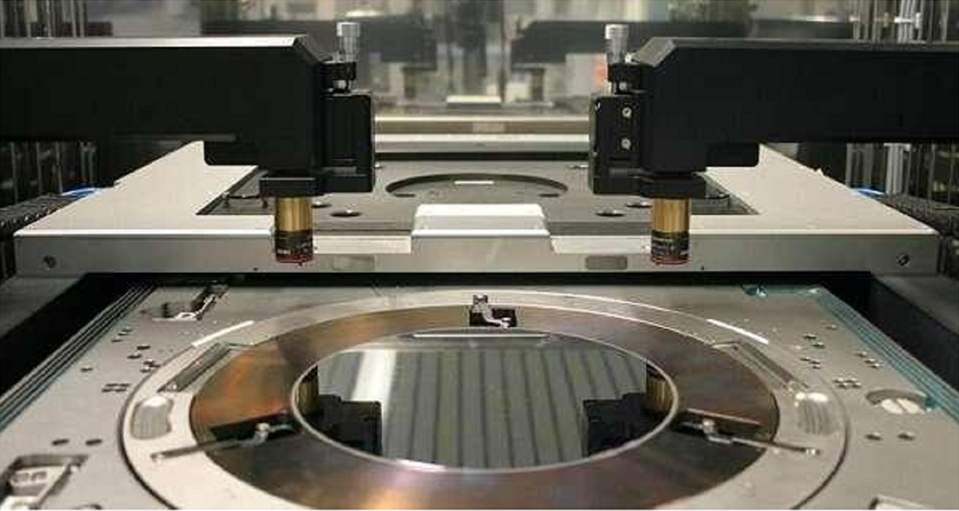
On the fab floor, a 0.5°C hotspot across the wafer during the photoresist bake can quietly kill linewidth control—and your yield. The reflector in your curing lamp isn’t just a piece of hardware. It shapes the thermal field that makes the process repeatable, shot after shot. We engineered this reflector for wafer curing lamps to hold ±0.1°C thermal uniformity, so your soft bake and hard bake profiles track the recipe exactly. Here’s what’s under the hood. We pair a high-purity quartz reflector with spectral coatings tuned for short-wave and medium-wave infrared. That gives you stable, repeatable energy distribution that respects the photoresist thermal budget. The unit is compatible with Class 1–100 cleanrooms, built with low-outgassing materials and a surface finish that keeps particle generation near zero. It’s meant to run 24/7 with no unplanned downtime, and it holds consistent output over 5,000+ hours with less than 5% intensity drift. In lithography, temperature uniformity is the quiet partner to CD control. With ±0.1°C across the wafer, you cut edge-of-field defects and tighten critical dimension distribution. The reflector’s clean profile means less rework, shorter qualification cycles, and lower energy use because the heat is focused where it needs to be. For photoresist processing, that adds up to fewer scrap wafers and line-yield you can plan around. Installation comes down to lamp orientation and airflow. The reflector has to be aligned within 0.5° to keep the specified uniformity; misalignment shifts the isotherms. It fits standard halogen and NIR curing lamp housings, but retrofit kits are model-specific. After swap-in, plan for a brief thermal soak-time adjustment to recalibrate the process window.