
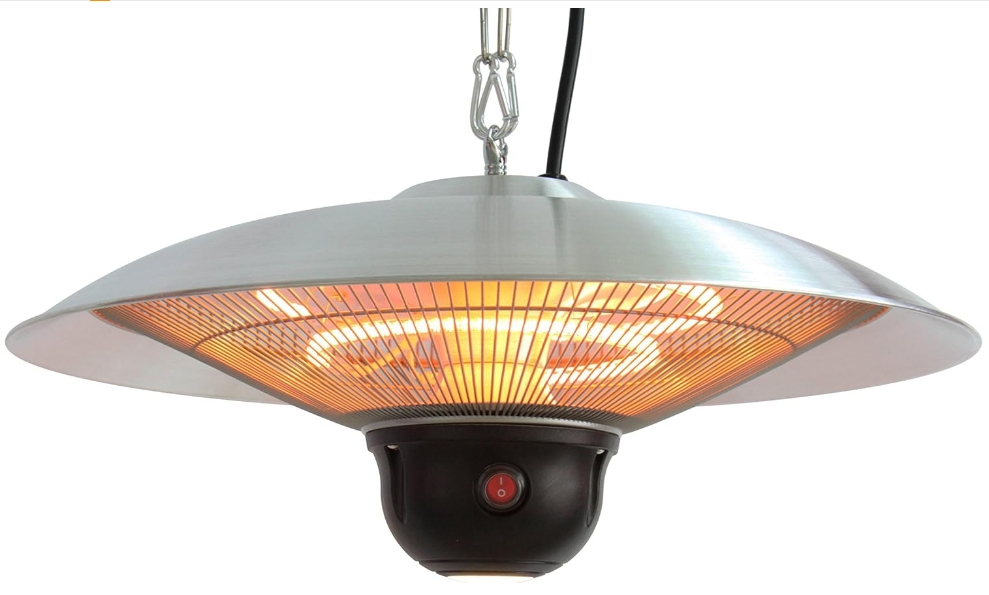
Getting Your Outdoor Heating Right
Putting infrared heaters on a patio isn’t as simple as just bolting them to the wall and flipping a switch. If you do it wrong, you end up with a weird situation where your customers’ heads are roasting while their feet are freezing. We see it all the time. People mount them too high or too low, and suddenly the heater is barely doing anything, but your electric bill is skyrocketing.
Watch Your Ceiling
Here is the thing about infrared heat: it travels in a straight line. It doesn’t float around like a hot breeze. If you slap a high-powered heater too close to a low ceiling, you’re basically just heating up your roof. This creates a “heat trap.” The unit gets too hot, the internal thermostat panics and shuts the thing off, or—worst case—you actually damage your ceiling. Try to keep at least 1.5 to 2 meters between the floor and the heater. If your ceiling is low, don’t just force a powerful unit in there. Use a wider-angle reflector to spread the warmth out. Otherwise, you’ll get these intense “hot spots” that make people scoot their chairs away from the table.
Making the Patio Pay for Itself
Let’s be honest: a freezing patio in December is just wasted space. When you get your heating zones right, you’re basically adding square footage back to your restaurant. The math is pretty straightforward. If those 20 seats are empty because it’s too cold, you’re leaving money on the table. But when it’s a cozy 22°C (72°F) at shoulder level? People linger. They stay for that extra round of drinks or a dessert they weren’t planning on ordering. We’ve seen the right setup bump up winter table turnover by 20% to 30%.
The Power Problem
One warning: these heaters are power-hungry. You can’t just plug a few of these into a standard wall outlet and hope for the best. You’ll need to check your electrical panel to make sure it can handle several 2kW or 3kW units running at the same time. There is nothing worse than having your breakers trip right in the middle of a Friday night dinner rush. It’s worth spending a little time checking your amperage now so you don’t have to pay for a massive electrical overhaul later.