
Stop Wasting Time Heating the Air: The Case for IR in Bio-Sensors
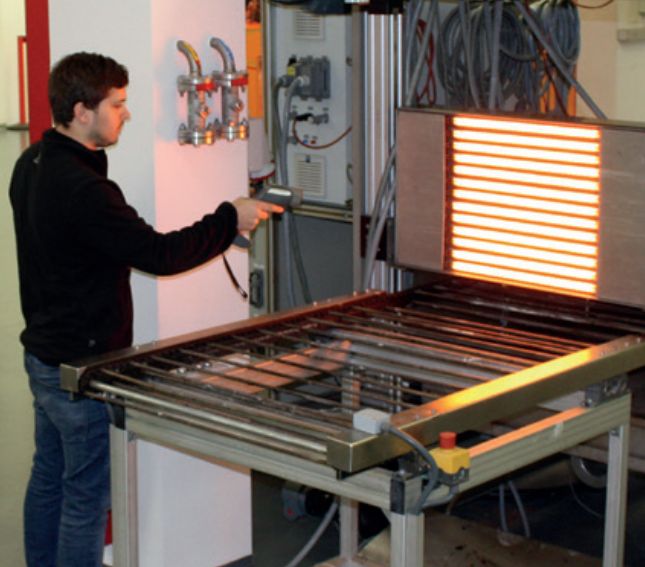
If you’ve spent any time on a bio-sensor fabrication line, you know the drill. Most of the old-school setups rely on hot air circulation. It’s the standard, but honestly? It’s a slog. Think about it. To get your substrate to the right temperature, you have to heat up every single cubic inch of air in the chamber first. It’s slow, it eats power, and you’re basically paying to heat a room just to warm up a tiny piece of material. Here is where Infrared (IR) changes the math. Instead of waiting for the air to get hot, IR lamps shoot energy straight into the material. No middleman. No “warm-up” lag. You just turn it on, and the heat hits the target almost instantly. For those of us working with bio-sensor layers, this is a massive win. We’re talking about curing times that used to take minutes now taking seconds. When you cut your cycle times by 60% or 80%, your throughput skyrockets—and you don’t have to spend a dime expanding your cleanroom footprint to do it. But it’s not just about speed; it’s about control. Depending on what your substrate is made of, we can swap between short-wave or medium-wave IR emitters. The real beauty here is “zoning.” With hot air, you get a blunt, uniform heat that often over-bakes the edges of your sensor. With IR, you can actually map out the heat. If the center of your sensor needs more heat than the perimeter, you just arrange the lamp array to match that profile. It’s surgical. Now, let’s be real: IR isn’t a magic wand. It has its quirks. Because the heat is so intense, you can end up with steep thermal gradients. If your material doesn’t conduct heat very well, you might scorch the surface before the core even gets warm. It’s a balancing act. You have to get the wattage and the distance just right so you don’t fry your substrate. You’ll also need to be more disciplined with your controls. You can’t just “set it and forget it.” You need fast-response thermocouples and a tight PID loop to make sure the temperature doesn’t overshoot and ruin a batch. Still, for any line moving toward high-volume fabrication, IR is becoming the go-to. It just comes down to raw speed and the kind of precision that hot air simply can’t touch.