Getting Temperature Right in IR Semiconductor Heating
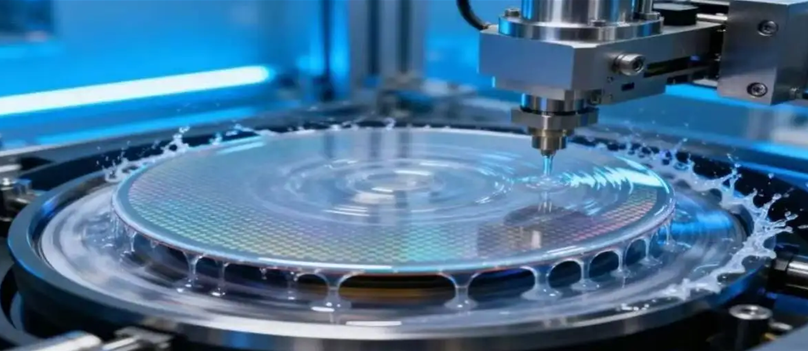
If we actually want to cut down on carbon in semiconductor fabs, we have to stop relying on those old-school resistive heaters. They’re just too slow. We’ve moved toward infrared (IR) lamp systems because they hit the target temperature way faster and don’t waste nearly as much power. But there’s a catch. If you want to do this without frying your wafers, you need a thermocouple that can actually keep up with how fast an IR source ramps up. The struggle with the feedback loop IR lamps dump a massive amount of heat instantly. If your thermocouple is sluggish—what we call thermal lag—you’ll blow right past your target temperature before the sensor even realizes it. That’s how you burn a substrate. To stop that from happening, we use high-grade Type K or N thermocouples. They give the PID controllers the real-time data they need to throttle the power. It stops that annoying “hunting” effect where the temperature just bounces up and down around the set point. Dealing with the environment In a cleanroom, outgassing is a nightmare. One tiny leak of contaminants and the whole batch is ruined. That’s why we stick with mineral-insulated (MI) sheathing; it keeps everything locked down tight. Placement is everything, too. You can’t just stick a probe anywhere. It has to measure the actual wafer surface, not the air around it or the heat coming off the lamp. It takes some precise mechanical tweaking to make sure you aren’t getting signal noise from the high-voltage power lines. The trade-off Here is the tricky part: speed usually comes at a cost. A thinner sheath means the probe reacts faster. Great, right? Well, not exactly. Those thin probes take a beating during high-heat cycles and tend to burn out faster. You’re basically balancing how fast you want the sensor to react against how often you want to climb in there and replace it. If you demand millisecond response times, just be ready to swap sensors more often. The upside? When you get this right, your factory gets a lot greener. You stop wasting energy heating up the entire chamber and only heat the workpiece itself. It cuts your kilowatt-hours per wafer and actually makes those carbon-neutral goals feel doable.