
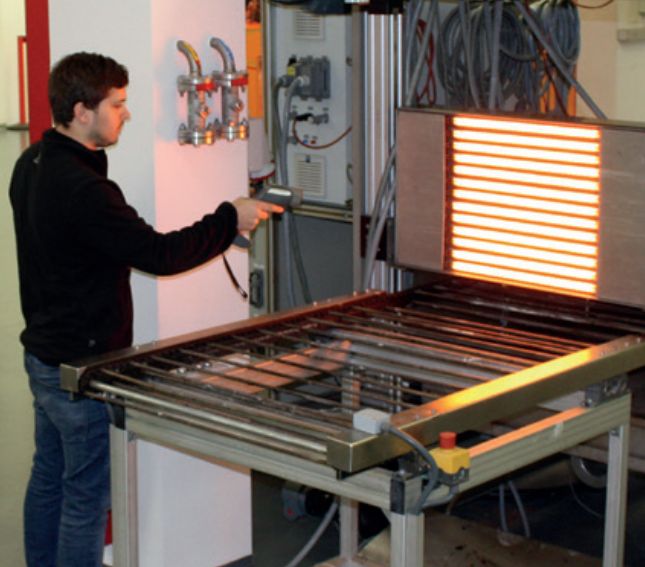
Stop Wasting Heat on Your Wafer Surfaces
When you’re heating silicon wafers, every wasted watt is basically money leaking out of your pocket. Most standard reflectors are a bit leaky—they let too much energy bleed into the chassis instead of hitting the target. That’s why we use gold. It sounds fancy, but it’s practical. Gold is incredible at reflecting infrared energy. Instead of the lamp housing soaking up the heat, the gold pushes almost all of it right back onto the wafer.
Why gold actually works
Here’s the thing about aluminum: it starts to struggle as IR wavelengths get longer. Gold doesn’t. By adding a precision layer of gold, we stop that energy from just vanishing. This means you don’t have to crank the voltage to get the heat you need. You can run your lamps at a lower power setting and still hit your target temperature. It’s a win-win. Your quartz tubes aren’t under as much thermal stress, and your filaments actually last longer.
Getting the heat where it belongs
We don’t just reflect the light; we focus it into a tight footprint. This creates a high-density heat zone. The result? Your ramp-up times get faster, and the temperature stays consistent across the entire wafer. If you’re using old reflectors that are pitted or oxidized, you’re losing that focus. But gold doesn’t oxidize. It stays clean. It keeps the heat exactly where it needs to be.
A few things to keep in mind
Since gold coatings push so much more heat onto the wafer, you’ll want to keep an eye on your cooling loops. Because the energy is so concentrated, a tiny misalignment in your sensor or lamp can create a hot spot. Plus, if you’re switching from aluminum to gold, don’t just plug and play. Take a moment to recalibrate your PID controllers so you don’t overshoot your temperature. Get it wired up, tweak your sensors, and you’ll see your power bills drop.